


Ep. 16 (Part 1)
Simplifying Financial Wellness for Frontline and Immigrant Workers
TAL CLARK | SEPTEMBER 23, 2026
Listen to Audio

Watch on Video

Episode Transcript

Tal Clark: Hello everyone, and welcome to the Instant Payments Podcast. I’m your host, Tal Clark. I’m the CEO of Instant Financial, a fintech company that’s modernizing payments and payroll for hourly workers and their employers. I’ve worked in the payments industry for 30 years, and I’m glad you’re tuning in today.
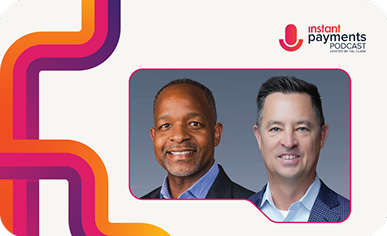
If you like what you hear, please do us a favor and subscribe, leave a review, or suggest a future guest. This podcast features payments and payroll leaders to discuss some of their challenges and what technologies they’ve used to improve their workplace and the lives of their workforce. Today’s guest is Amir Hemmat, co-founder and CEO of Welcome Tech, an AI-powered workforce and financial wellness platform serving more than four and a half million immigrant and frontline workers across the United States.
Welcome Tech provides access to essential healthcare and financial services for both banked and unbanked individuals. They are also one of our partners in Instant’s financial [00:01:00] wellness program, helping employees across our customer base to access critical information to help them navigate their finances.
Prior to Welcome Tech, Amir co-founded an educational platform providing practical information to communities about life in the United States. Before becoming an entrepreneur, he worked on health and human services policy in the California State Senate. Welcome, Amir. Where are you joining us from today?
Amir Hemmat: Hey, Tal. Great to be with you. I’m here in Los Angeles. Good morning to you. Glad to be with you and excited to have a conversation.
Tal Clark: Yeah, it’s great to catch up and great to have the opportunity to talk. You and I have, known each other now for a little over, probably a couple years when we first engaged via I think TTV Capital, who both work with- works with both of us. But I haven’t had a chance to catch up in a while, so it’s great to catch up.
Hey, I ran through your background briefly there, but give it to me in your own words.
Amir Hemmat: Yeah. I think maybe to understand my profile a little bit, I grew up in a first-generation immigrant household, [00:02:00] parents, made a great life for me and my brothers. And, father was a physician and sort of always admired the career path of being able to sort of make quality life but also make an impact i-in people’s lives.
And so I pursued healthcare and actually medicine initially, and went to medical school for a brief period before I had a chance to work in healthcare policy. And, working with the California State Senate Health and Human Services Committee, had a chance to get insight on communities at need and sort of how policy and government and private sector come together to try to make change.
And you can think about it one of two ways. Either, either the work and policy deterred me from it or it inspired me into sort of the work I committed myself to, which was generally a career in social entrepreneurship, and at one point or [00:03:00] another, wasn’t well understood what that was about.
But I think a lot of us that enter the world of entrepreneurship and tech, trying to bring that together to build great businesses, sure, but also to make some kind of impact in society. And so my journey’s been one of sort of trying to build companies and businesses that are meeting gaps in society.
My last business was an educational media platform for immigrants in the US. Worked with consulates and embassies to provide educational information in the waiting rooms of those locations, reaching millions of people every year. Learned a ton from that in terms of the lack of information, the lack of access, to communities, in particular immigrant communities.
And evolved from there to realize that our workforce is becoming more and more dependent on our immigrant communities, but also a lot of frontline workers who don’t have the tools and resources they need to be [00:04:00] successful. And a recognition in that, that, their success is our success, is a part of Welcome Tech and what we’re doing today.
So, it’s been a journey around social entrepreneurship, building companies, and of course, within all that technology and evolution of that, playing a part, throughout that journey is, is what my career’s been about.
Tal Clark: Well, look, so you’ve been doing this for about 20 years or so, I think, and, what have you learned then about the financial realities, these workers face and many employers and financial services companies still misunderstand? I mean, ’cause one of the things we try to do is communicate the importance of some of the things we do and some of the things you have built in with our app to the employers.
But the message sometimes doesn’t seem to get through, and it seems to be a little bit of a misunderstanding between employers and their workforce. So tell me a little bit your thoughts on that and, ideas about how we can all overcome that in business, I guess.[00:05:00]
Amir Hemmat: Yeah, I think, first we need to recognize that we’re all, doing our best and trying to keep up with whatever we’re focused on. And so it’s hard to point to one place where, the solution needs to be. But I think we can all come together and realize like systems in particular for this demographic of workforce are way more complicated and difficult than they need to be.
I mean, you and I have challenges every day in terms of how to navigate accessing critical services in our lives. So if you just take a moment to ask yourself some common sense questions, on do we need to have such complicated systems and complicated access points for our workers, especially in a day and age where we have technology and data the way we do, the answer is no.
Like, it doesn’t need to be as complicated, but we need to have companies that are building to solve for this worker as well. And so you and I probably get an inside view in terms of, financial [00:06:00] services in many cases being a starting point, for this consumer. And financial wellness kind of starts before and continues after, the actual interaction with a financial service.
And so, one of the reasons we love our partnership with Instant is that payments is kind of the start to a pathway in our view, where we can connect workers to the other critical services in their lives that are essential not only for their success, but also for the employers that they’re with.
Because until we actually recognize that there is a broader life and a broader set of needs that worker has, we’re gonna continue to see challenges on sort of turnover and retention outside of recruitment, which we can talk about more as continuing to become a challenge for categories of industries.
Tal Clark: Yeah. Well, look, I think, one of the things we talk about and I’ve talked about on this podcast a lot is I just think that, [00:07:00] financial wellness sort of starts with access, right? Which is one of the things that we’re trying to provide. You’re trying to provide a type of access as well, but there’s still a number of frontline employees, many who are unbanked.
Why is something in your view as basic as getting established financially so fragmented for someone new to the US when you’re working with immigrant communities?
Amir Hemmat: Yeah, both for immigrant communities as well we’re seeing it across, frontline workforce, broadly. Access is one way to describe it. I would also say systems just haven’t been built for this group of workers. When you look at companies, frankly even capital invested behind those companies, it hasn’t been for the primary building and tailoring and personalization of services to this workforce.
And so when I speak to employers, when I spend time out there talking to workers, the [00:08:00] disconnect is they’re having to work with tools and systems and experiences and journeys that haven’t been built for them. And it’s difficult enough to navigate, again, for those of us who maybe are more familiar with some of these systems and tools or even grow up in them.
But for somebody who is new to these systems, and also navigating things that are not built for them specifically, it’s super frustrating and, frankly, people don’t access. So when you ask about, banking, I mean, you tell me, Tal, if somebody told you that you have to press number two to access an account and that you’re gonna get fees that feel encumbering, and that you can’t access a broader set of financial services that you can’t qualify for because they haven’t been built for you, does that sound like an experience you’d wanna enroll in?
Probably not. Right? And so we’ve gotta use some [00:09:00] common sense here and recognize that especially some of the old brick-and-mortar infrastructure that’s been built, for society at large really hasn’t been able to solve the needs of this particular workforce class or demographic in our country.
Tal Clark: Okay. Well, that’s a great point. let me ask you to give me another example then of a, of services that you see that should be accessible, but the complexity of accessing those services for whatever reason, because it hasn’t been built for them, I think are your words. Give an example of– another example of that and something that maybe we can look at or you guys can look at, others in the space can look at to improve
Amir Hemmat: Yeah, well, one we spend a lot of time on and there’s a lot of demand, from consumers at large, but in particular in this demographic is healthcare and access to healthcare needs. And thinking about it not just for the individual worker, but for their entire household. And so if you’ve got a [00:10:00] worker who has a sick child at home, and that worker needs to take a day off, maybe take a couple bus rides to get to an appointment, at which, there may or may not be someone who understands their needs or speaks their language, you’re gonna lose that worker at least for that day or two.
And that’s not just the worker’s problem, that’s your problem as well, right? And so how do we solve something like that by making telemedicine more accessible? How do we solve something for that by getting a quick prescription to that mother or father for their child so, they, don’t need to take a day off from school and they can get on their way.
And so I think we’ve just gotta be smarter given technology has evolved to provide opportunities for access and solutions to evolve more rapidly for this demographic. And sometimes it just takes shining a light on it and kinda having a few entrepreneurs, [00:11:00] that can actually build solutions for this demographic.
But, unfortunately without the capital being a focus there and, without a lot of entrepreneurs that understand the challenges, it’s taking much longer than it needs to.
Tal Clark: Okay. Yeah, great points and great insight. I, we’ve mentioned financial wellness a little bit, and let me circle back to that. Sometimes that term is overused, especially when we’re talking to employers or in sales cycles or whatever it may be. It’s become sort of a buzzword, and it’s and it should be much more than that, right?
It should be very meaningful and something we’re all trying to work towards. And often it’s g- it’s discussed primarily in terms of wages and financial products, but I think you believe it should begin much earlier. Sort of where do you see financial wellness, and when you think about financial wellness, where do you start?
What’s sort of that base level?
Amir Hemmat: It’s been a journey for me to kinda really understand it all. But today I would [00:12:00] tell you, for me, financial wellness sort of starts at getting a job and generating income. And then obviously being able to get paid the way you need to get paid when you need to get paid.
And then the pathway that begins from there, to sort of financial stability. And, and that for me means, accessing the services that are critical to your every day, whether that be healthcare, housing, transportation, et cetera, that, that allow you to thrive. And then finally just, overall recognition in the, systems that, these are problems for us to solve so that we all benefit collectively versus a selfish need of a, a worker or an employee.
At the end of the day, if we don’t solve these things, we are chasing recruitment [00:13:00] and challenges around retention, which has been the primary way employers have chosen to sort of solve this, this issue and we see the result of that.
Tal Clark: Yeah. Yeah. We have different immigra- immigrant, immigrant groups, excuse me, I can’t even speak this morning, in the US and around the US, and a very mixed society, which is great in many respects. Are there things culturally that we all need to look at as part of our businesses and our solutions to, to maybe fit certain groups depending on the, the verticals and sectors that we’re focused on at all?
Amir Hemmat: Well, I think technology’s helping to be the sort of great equalizer in being able to make tools more accessible. So the first step is just recognizing that we have demographics of a variety of needs and, and then the second is to sort of work with technology partners, in my view, that know how to customize tools for those [00:14:00] specific demographic needs.
And so, as, as you and I have discussed, ultimately our, data, our technology is leading to an opportunity not only to be a, a tool, but really an advocate for that worker. And depending on their background, their needs, where they are on their skill level, we should be able to build more personalized tools, that enable them to, be successful in their roles.
Tal Clark: Okay. That’s great insight and I appreciate that. I think, Amir, this is a good place for us to pause. We’ll pick this up in part two, where we’ll discuss how Instant partners with Welcome Tech to provide vital services to the hourly workforce. For our audience, you can find Amir on LinkedIn. We’ll link to the, to his profile in the show notes.
You can also check out welcome.tech to learn more about his company. You can follow along with the new episodes at instant.co/podcast or wherever you get your podcasts. Please share the episode and leave a review. [00:15:00] Thanks for tuning in to the Instant Payments Podcast.
How Instant Tips Helps Employees
From faster tip distribution to higher employee satisfaction, Instant Tips delivers results across industries. Businesses
save time with automated payouts, reduce cash-handling risks, and give team members the convenience of digital
access to their tips. Explore our resources to see how Instant Tips can make every shift more rewarding.
PodCast
Tal Clark interviews Dr. Martin Armstrong, VP of Payroll of Shared Services.

Case Study
Ultra Steak Inc. is a long-established restaurant company headquartered…

Blog
Digital tipping apps replace cash handoffs with instant, automated payouts….


